

Cat carrier training can feel impossible when your cat disappears under the bed the moment you bring out the carrier. Sound familiar?
For many cat owners, getting their feline friend into a carrier is one of the most stressful parts of a vet visit or road trip. There may be hiding, scratching, loud meowing, or a last-minute chase around the house.
But here’s something worth knowing: your cat doesn’t have to hate their carrier.
With a little patience and the right approach, you can help your cat see it as a familiar, safe place instead of something to fear.
Why Are Cats So Afraid of Carriers?
Cats are creatures of habit. They feel most comfortable in familiar environments where they know what to expect.
Unfortunately, many cats only see their carriers when something unusual is about to happen, such as a veterinary appointment or a long car ride.
Over time, they may start associating the carrier with unpleasant experiences.
Other reasons your cat might avoid a carrier include:
- Unfamiliar smells: A carrier stored in a garage or closet may smell strange.
- Feeling trapped: Some cats become anxious when they can’t freely leave a small space.
- Uncomfortable travel: Car movement, unfamiliar sounds, and sudden stops can be stressful.
- Past experiences: A frightening trip may make your cat reluctant to enter the carrier again.
The good news? You can gradually build a more positive association.
1. Stop Hiding the Carrier in the Closet
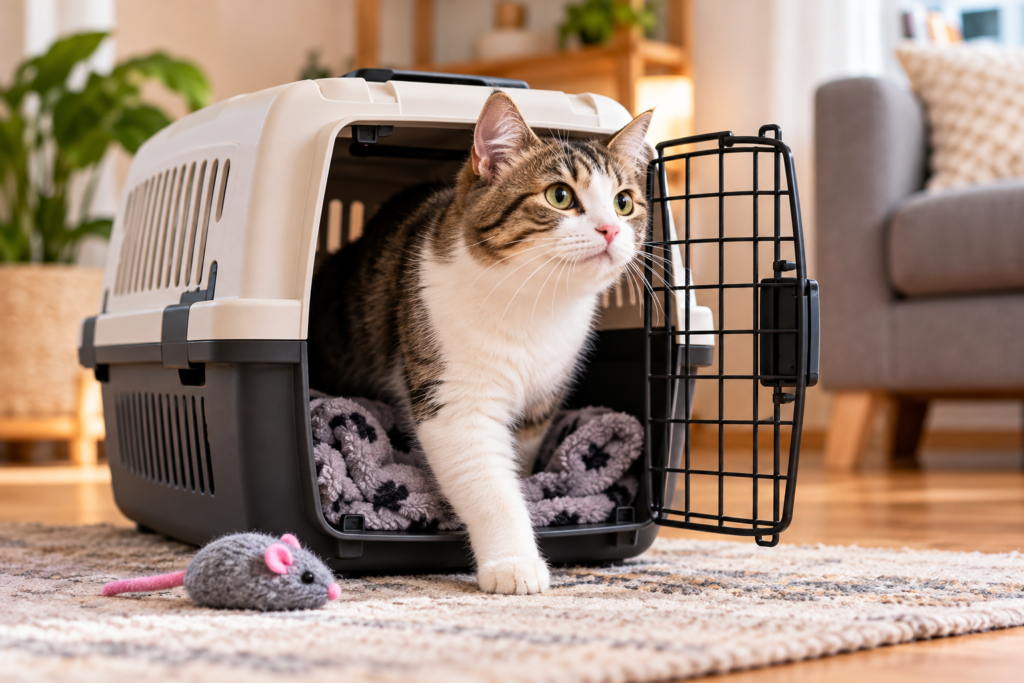
One of the easiest changes you can make is to leave the carrier out where your cat can see it.
Instead of bringing it out only before appointments, place it in a quiet corner of your home.
Leave the door open and allow your cat to investigate whenever they feel comfortable.
You might notice your cat sniffing it, walking around it, or even stepping inside.
Don’t rush this process. Some cats become curious within minutes, while others need several days.
The goal is simple: make the carrier an ordinary part of your cat’s environment.
Giving your cat safe spaces to explore can also support their confidence at home. If you’re looking for another way to enrich your cat’s environment, read our guide to what a catio is and whether your cat needs one.
2. Make the Inside Feel Cozy
Imagine being placed inside a hard plastic box with nothing comfortable to sit on. It wouldn’t be particularly inviting.
Your cat probably feels the same way.
Try adding a soft blanket or small towel that already smells like home.
If your cat has a favorite washable blanket, that can be an excellent choice.
You can also place a familiar toy inside.
Just make sure the bedding doesn’t block ventilation or interfere with the carrier door.
A comfortable, familiar-smelling space can help your cat feel more secure.
3. Use Treats to Build Positive Associations
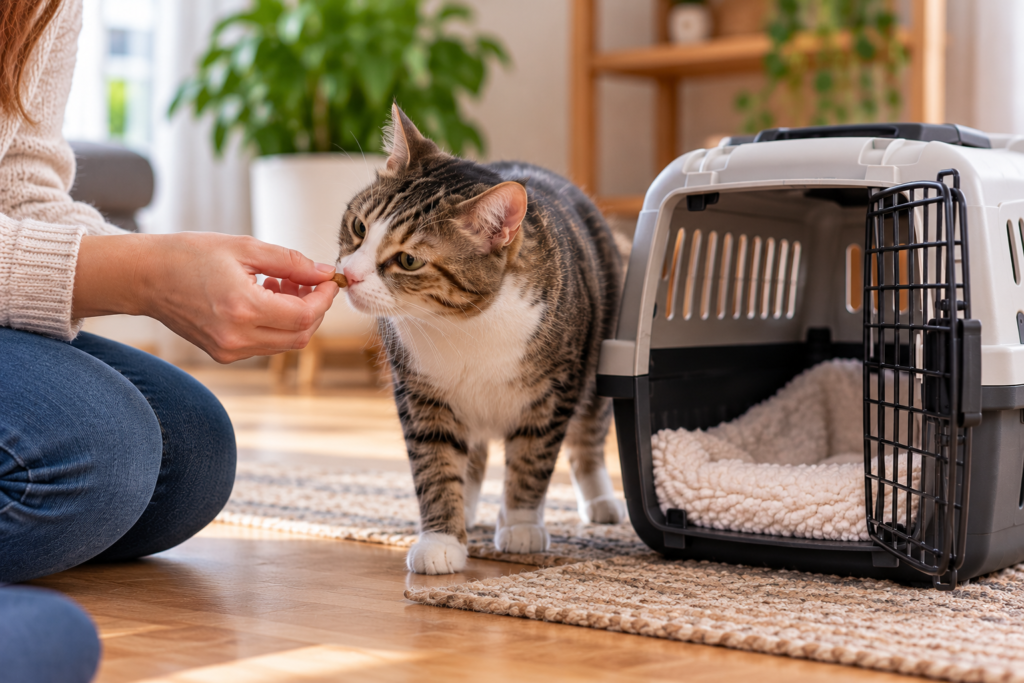
Food can be a helpful training tool, especially if your cat enjoys treats.
Start by placing a treat near the carrier entrance.
Once your cat feels comfortable approaching, place another treat just inside.
Gradually move the treats farther back as your cat becomes more confident.
Here’s the important part: don’t close the door immediately when your cat enters.
Let them walk in, collect the treat, and leave whenever they want.
This helps your cat learn that entering the carrier doesn’t automatically mean losing their freedom.
You can also occasionally feed a small meal near the carrier or inside it, provided your cat is comfortable.
Keep sessions short and relaxed.
4. Practice Closing the Door Slowly
Once your cat willingly enters the carrier, you can begin practicing with the door.
Start by gently moving it without closing it completely.
Reward your cat for remaining calm.
Next, try closing the door for just a second or two before opening it again.
Over several sessions, gradually increase the time.
If your cat becomes frightened, starts struggling, or tries desperately to escape, you’ve probably moved too quickly.
Go back to an easier step.
Remember, progress isn’t measured by how fast you can close the door. It’s measured by how comfortable your cat feels.
5. Introduce Movement Before the Big Trip
Being comfortable inside a stationary carrier is one thing. Being carried through the house is another.
Once your cat is relaxed with the door closed, try lifting the carrier a few inches off the floor.
Set it down gently and offer a reward.
As your cat becomes more comfortable, practice carrying it across the room.
Eventually, you can try walking around the house.
When you’re ready to introduce the car, begin with a short session inside a parked vehicle.
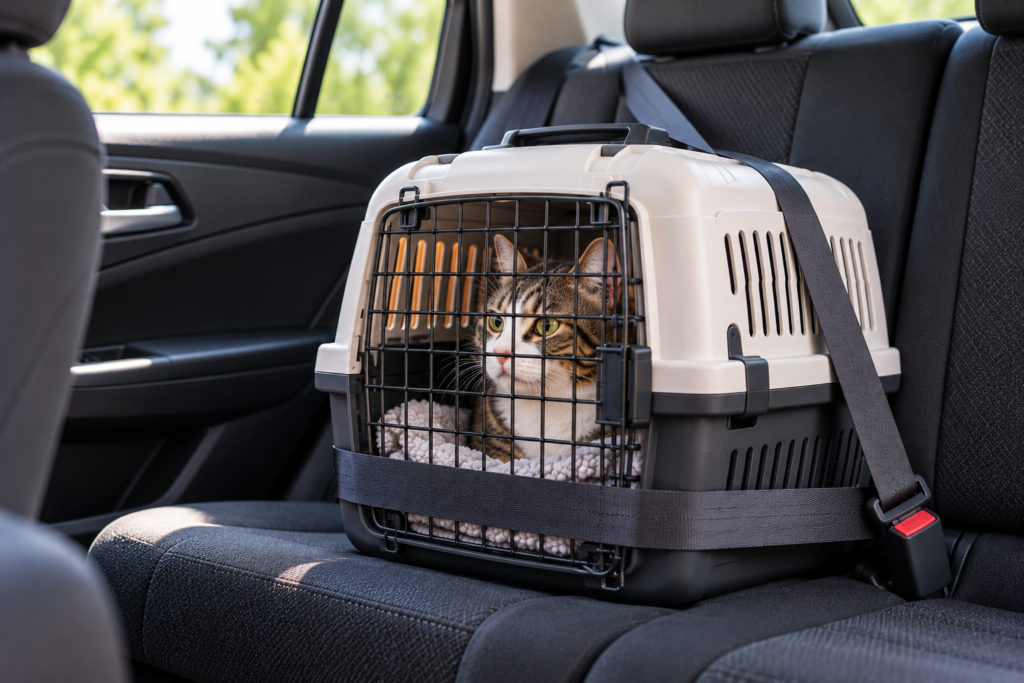
Later, try a very brief drive if your cat seems comfortable.
Always secure the carrier appropriately during travel, and never let your cat roam freely inside a moving vehicle.
If your cat shows severe distress or repeated vomiting during car rides, talk with your veterinarian before continuing travel practice.
6. Choose a Carrier That Works for Your Cat
Not all cat carriers are equally comfortable or practical.
A good carrier should allow your cat to stand, turn around, and lie down naturally.
Look for features such as:
- Good ventilation: Your cat needs plenty of airflow.
- Secure closures: Doors and fasteners should stay firmly shut.
- Easy cleaning: Accidents can happen during stressful trips.
- Sturdy construction: The carrier should feel stable when lifted.
- Easy access: A top-opening design or removable upper section can make veterinary visits less stressful.
For many cats, a sturdy hard-sided carrier with a removable top is a practical option.
For more advice on making carrier trips less stressful, check out the American Association of Feline Practitioners’ Cat Friendly Homes resources.
Avoid choosing a carrier that’s so small your cat feels cramped.
What If Your Cat Still Refuses to Enter?
Some cats need more time than others, especially if they’ve had frightening experiences.
If your cat continues avoiding the carrier, return to the basics.
Leave it open, place familiar bedding inside, and reward even small signs of curiosity.
Avoid chasing your cat around the house or forcing them into the carrier during routine training sessions. That can make the fear worse.
However, if your cat needs urgent veterinary care, don’t delay medical attention while trying to complete carrier training.
For cats with intense fear, your veterinarian may recommend additional behavior strategies or medication for necessary travel.
Never give your cat human sedatives or over-the-counter calming medications without veterinary guidance.
How Long Does Carrier Training Take?
There’s no universal timeline.
Some cats begin entering their carriers willingly after a few days of positive experiences.
Others may need several weeks or longer.
Your cat’s personality, age, and previous experiences can all influence their progress.
Rather than focusing on a deadline, pay attention to small improvements.
Maybe yesterday your cat wouldn’t approach the carrier, but today they’re sniffing the entrance.
That’s progress.
And those little victories add up.
A Few Mistakes Worth Avoiding
Even well-meaning cat owners sometimes make carrier training harder without realizing it.
Try to avoid these common mistakes:
- Bringing out the carrier only on vet appointment days.
- Forcing your cat inside during practice.
- Closing the door before your cat feels ready.
- Making training sessions too long.
- Using the carrier as punishment.
- Ignoring signs of fear or distress.
The best training sessions often end before your cat becomes uncomfortable.
That way, the next experience can begin on a positive note.
Final Thoughts
Your cat may never become the kind of traveler who happily jumps into a carrier the moment you pick it up.
And that’s okay.
The real goal isn’t to make your cat love every car ride or veterinary appointment. It’s to help them feel safer and more confident when travel is necessary.
By keeping the carrier accessible, making it comfortable, and practicing in small steps, you can turn something frightening into something much more manageable.
A little patience today could make your next vet visit easier for both of you.
And your cat will appreciate having one less thing to worry about.