

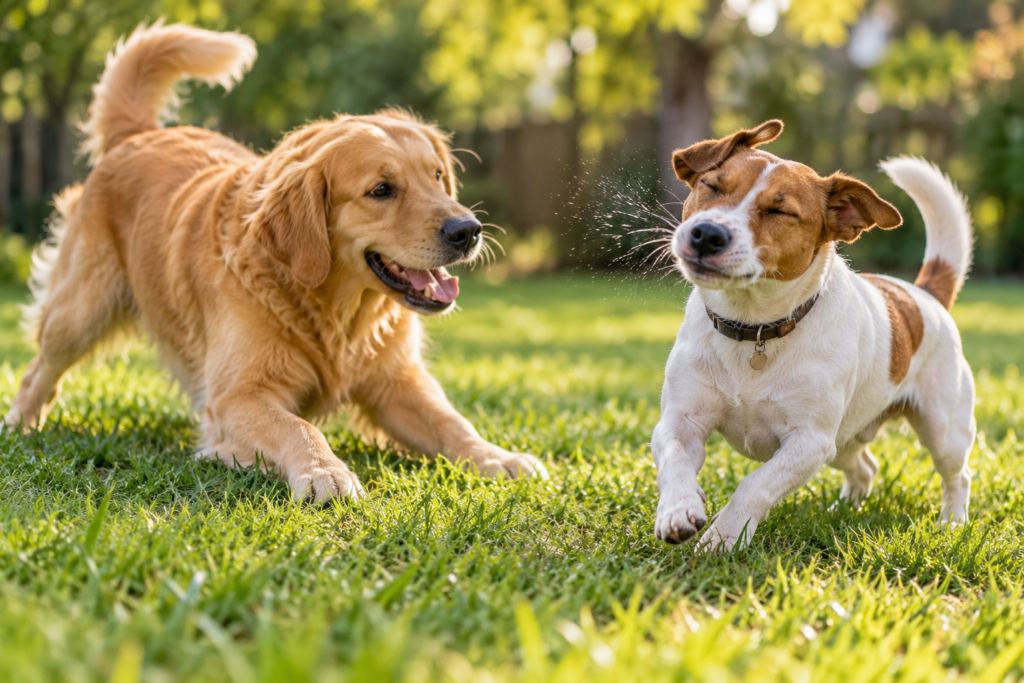
You’re playing tug-of-war with your dog, and everything seems normal. Their tail is wagging, they’re bouncing around, and suddenly—
Achoo!
A few seconds later, they sneeze again.
It might seem strange, especially when your dog isn’t sick and hasn’t been sniffing anything dusty. But if you’ve noticed your dog sneezing during an exciting game, you’re not alone.
These little bursts are often called play sneezes, and they’re a familiar behavior among dogs. While researchers haven’t established one explanation for every playful sneeze, the situation and your dog’s body language can tell you quite a bit.
Why Do Dogs Sneeze When Playing?
Dogs may sneeze during play for several reasons. Sometimes, the explanation is as simple as excitement or irritation inside the nose.
Other times, sneezing appears alongside the movements and signals dogs use when interacting with each other.
Here are three possibilities worth understanding.
1. Excitement During Play
Some dogs sneeze when they’re especially animated.
Think about what happens during a lively game: your dog runs, jumps, sniffs, pants, and moves their face in all directions. All that activity can coincide with an occasional sneeze.
You might notice it when your dog:
- Wrestles gently with another dog
- Plays tug-of-war with you
- Gets excited about a favorite toy
- Bounces around before a walk
- Makes exaggerated movements during a game
If the sneezing happens only occasionally and your dog otherwise looks comfortable, it usually isn’t a reason to worry.
2. A Possible Social Signal
You may have heard that dogs sneeze to tell each other, “I’m only playing!”
It’s an interesting idea, and some animal behavior discussions describe play sneezing as a possible social signal.
Dogs certainly use body language to communicate during play. They may bow with their front legs lowered, move in loose, exaggerated ways, or pause to let another dog catch up.
However, there isn’t enough evidence to say that every play sneeze is a deliberate message.
A sneeze might happen during a friendly interaction without being the reason the other dog understands it as friendly.
That’s why it’s better to consider the entire interaction rather than assign one fixed meaning to the sound.
3. Temporary Nasal Irritation
Sometimes a sneeze is simply a sneeze.
Running through grass, rolling on a carpet, or playing with a dusty toy can introduce tiny particles into your dog’s nose.
The body responds with a sneeze to help clear the nasal passages.
If your dog sneezes once or twice and immediately returns to playing, there may be nothing unusual happening.
Frequent sneezing, however, deserves a closer look, especially when it continues after playtime ends.
How to Tell If Your Dog Is Having Fun
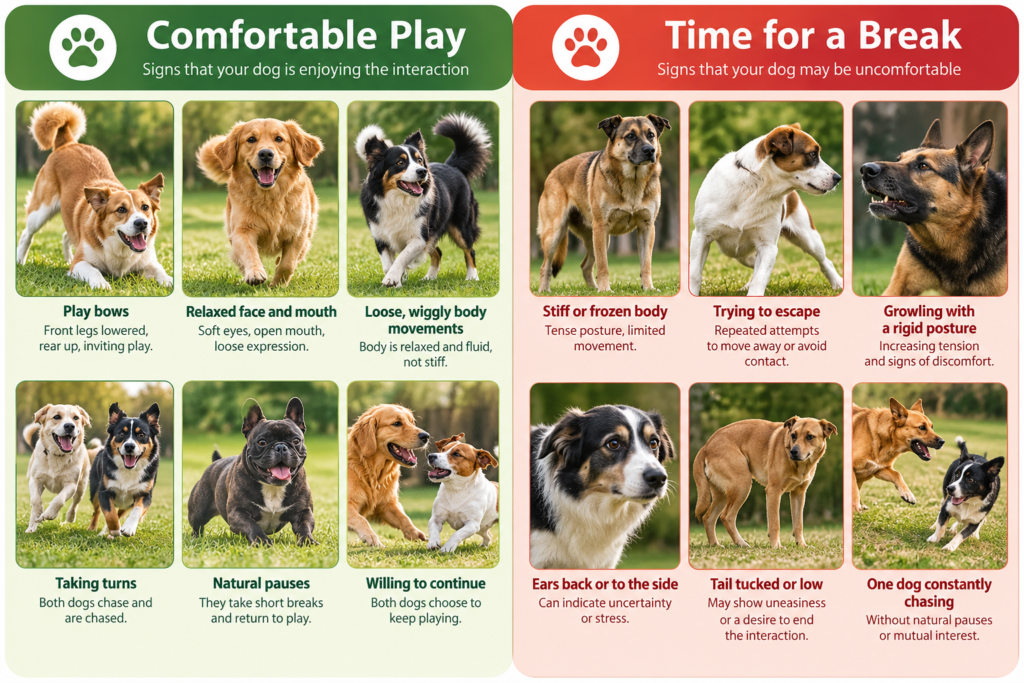
A playful sneeze is easier to understand when you look at your dog’s overall body language. As the infographic shows, relaxed movements, play bows, natural pauses, and a willingness to keep playing are encouraging signs.
On the other hand, stiff posture, repeated attempts to escape, or one dog constantly chasing another without breaks may signal discomfort. If play becomes tense, calmly separate the dogs and give them space. Remember, sneezing alone doesn’t tell you whether an interaction is friendly.
Play Sneezing vs. Reverse Sneezing: What’s the Difference?
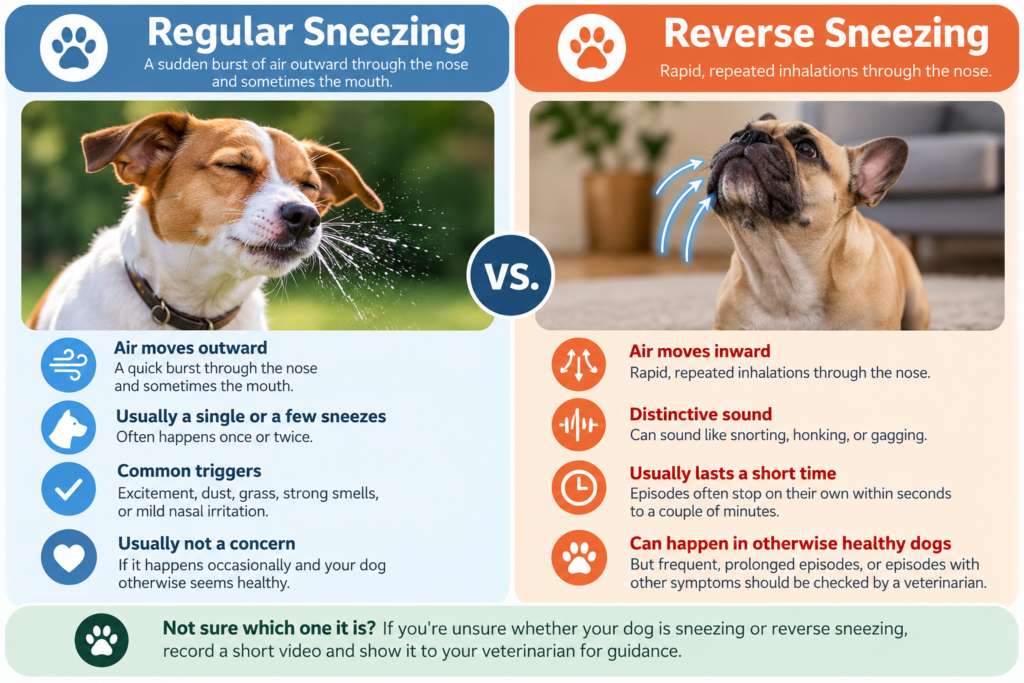
Although both involve the nose, regular sneezing and reverse sneezing are different respiratory events. The infographic above highlights how airflow, sounds, and typical behavior differ between them.
Reverse sneezing can look alarming, especially if you’ve never seen it before. According to the American Kennel Club, these episodes involve rapid, repeated inhalations through the nose and can occur in otherwise healthy dogs. However, frequent, prolonged, or unusual episodes deserve veterinary attention.
If you’re unsure what your dog is experiencing, try recording a short video to show your veterinarian. It can help them better understand what’s happening.
When Should You Worry About Sneezing?
An occasional sneeze during an exciting game is usually different from sneezing that happens repeatedly throughout the day.
Contact your veterinarian if you notice:
- Frequent or persistent sneezing
- Thick, bloody, or unusual nasal discharge
- Pawing repeatedly at the nose or face
- Swelling around the muzzle
- Coughing, unusual tiredness, or reduced appetite
- Sneezing that begins suddenly and continues after outdoor activity
These signs can have several causes, including irritation, infection, allergies, or something lodged in the nasal passage.
You don’t need to determine the cause yourself.
Difficulty breathing, collapse, or severe respiratory distress requires immediate veterinary attention.
And if your dog’s sneezing pattern changes noticeably, even without an obvious emergency, it’s reasonable to ask your veterinarian for advice.
Should You Stop Playing When Your Dog Sneezes?
Not necessarily.
If your dog sneezes once during tug-of-war, shakes it off, and happily continues playing, you generally don’t need to end the game.
Instead, observe their behavior.
Are they relaxed? Are they breathing comfortably? Do they still seem interested in playing?
If everything looks normal, an occasional sneeze is unlikely to be a problem.
But if sneezing becomes repetitive, your dog seems uncomfortable, or the environment is particularly dusty, pause the activity and see whether the symptoms settle.
You can also make playtime more comfortable by keeping toys clean and choosing spaces free from heavy dust, smoke, and strong fragrances.
Avoid spraying scented products around your dog’s play area.
Do All Dogs Sneeze When They’re Excited?
No, and that’s perfectly normal.
Some dogs seem to sneeze during nearly every exciting game. Others rarely do it at all.
Individual differences in behavior, nasal sensitivity, activity, and environment may all play a role.
There isn’t a particular number of play sneezes that every healthy dog should make.
It’s more useful to learn what’s normal for your own dog and notice when something changes.
Final Thoughts
So, why do dogs sneeze when playing?
Sometimes it may be connected to excitement or the physical activity of play. In other situations, it may happen alongside social behaviors, or simply because something briefly irritates the nose.
What we shouldn’t do is assume that every sneeze has one specific emotional meaning.
If your dog is relaxed, playful, and otherwise healthy, an occasional sneeze during a game is generally nothing to worry about.
But persistent sneezing, unusual nasal discharge, or changes in breathing deserve veterinary attention.
The next time your dog lets out a little achoo during playtime, look beyond the sneeze. Their body language and overall behavior will tell you much more about how they’re feeling.
Keep Exploring Pawzunoria
Curious about more of your dog’s everyday behaviors? Explore these helpful guides:
- Why Does My Dog Follow Me Everywhere? 7 Reasons Explained — Discover what may be behind your dog’s constant companionship.
- Do Dogs Dream? What Happens When Your Dog Sleeps — Learn what researchers know about dogs and their sleeping behaviors.