
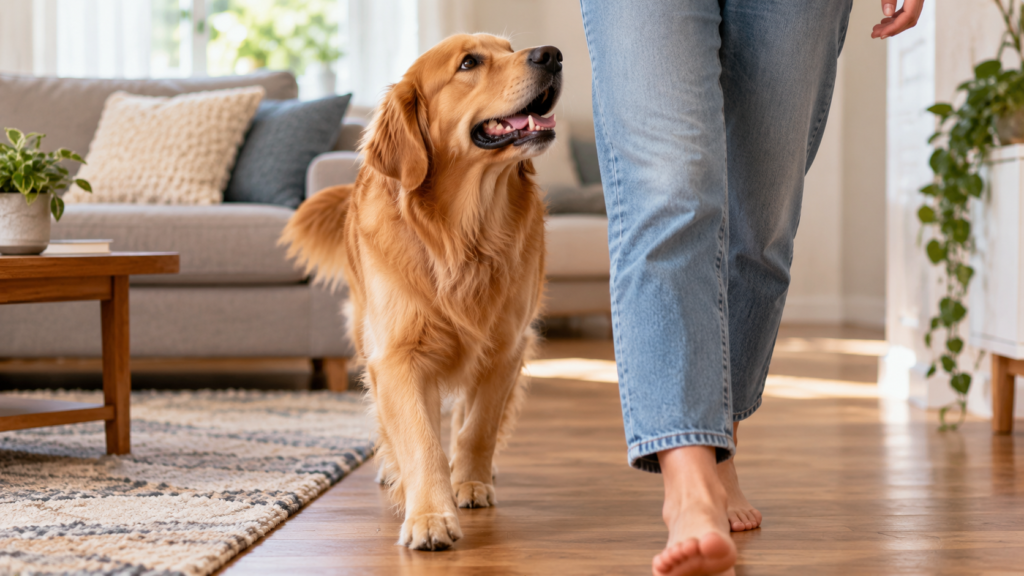
Why does my dog follow me everywhere? If you’ve ever asked yourself that question while walking from room to room with four paws close behind, you’re not alone. Even a quick trip to the bathroom can turn into a group activity.
If your dog follows you everywhere, you might wonder whether it’s a sign of love, a habit, or something you should worry about.
The good news? In many cases, it’s perfectly normal. Dogs have plenty of reasons to stay close to their favorite humans, and most of them are nothing to worry about.
Let’s look at seven possible explanations and how to tell when your dog’s attachment might need a little extra attention.
1. Your Dog Feels Safe Around You
Think about where you like to relax after a stressful day. Chances are, it’s somewhere familiar, with people who make you feel comfortable.
Dogs can seek that same sense of security.
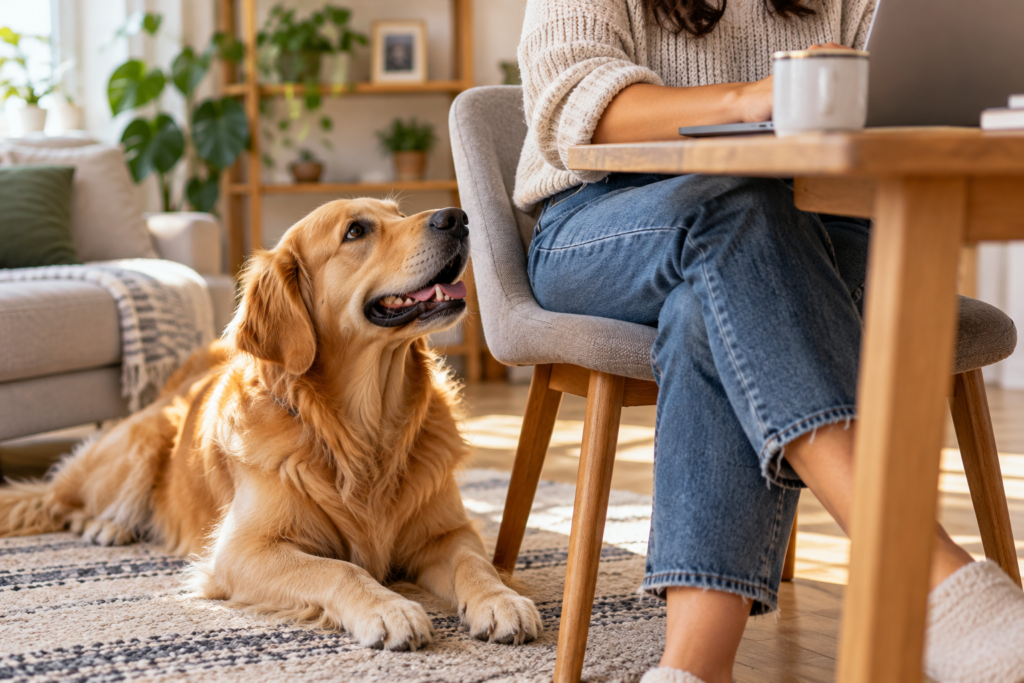
If your dog chooses to lie beside your desk while you work or follows you into unfamiliar rooms, your presence may help them feel more at ease.
This doesn’t automatically mean they’re frightened. Sometimes, being near you is simply their favorite place to be.
2. They Genuinely Enjoy Your Company
Dogs are social animals, and many develop strong attachments to the people they live with.
Some dogs show affection by cuddling. Others bring toys, lean against your legs, or quietly follow you from room to room.
Your dog might not need anything from you at all. They may just enjoy sharing the same space.
Of course, every dog has a different personality. An independent dog can love you just as much as one who never leaves your side.
3. You’ve Become Their Favorite Source of Good Things
Consider what happens throughout your dog’s day.
Who fills the food bowl? Who grabs the leash? Who offers a treat after a training session?
If the answer is usually you, your dog has learned that being nearby often leads to something enjoyable.
The American Kennel Club notes that attention, treats, and other rewards can reinforce following behavior.
For example, if your dog follows you into the kitchen and occasionally receives a snack, they may start checking the kitchen every time you go there.
It’s not manipulation. It’s learning.
4. They’re Curious About What You’re Doing
Dogs don’t have calendars or to-do lists, but they’re excellent observers of daily routines.
Picking up your keys might mean you’re leaving. Putting on sneakers could signal a walk. Opening a particular cabinet might mean dinner is coming.
So when you suddenly get up from the couch, your dog may wonder, What’s happening next?
Following you is one way to find out.
If your dog looks relaxed, wags their tail loosely, and settles down when nothing interesting happens, curiosity may be the simplest explanation.
5. Their Personality or Breed Plays a Role
Some dogs naturally prefer close contact with people.
Dogs developed for tasks involving frequent cooperation with humans, including certain herding and working breeds, may be especially attentive to their handlers.
But breed isn’t destiny.
You might meet a Labrador who wants constant company and another who prefers sleeping alone in the hallway.
Age, early experiences, temperament, and daily routines all influence how closely a dog follows their family.
That’s why it’s more useful to understand your individual dog than to assume every dog of a particular breed behaves the same way.
6. They Need More Activity or Mental Stimulation
Sometimes your dog follows you because there’s simply not much else happening.
Imagine spending the afternoon in the same room without anything interesting to do. You’d probably get curious whenever someone stood up, too.
Dogs benefit from opportunities to explore, sniff, play, and use their brains.
If your dog seems restless, consider whether their routine includes enough appropriate activity.
You could try:
- A relaxed sniffing walk.
- A food puzzle or stuffed enrichment toy.
- A short, reward-based training session.
- A simple game of finding hidden treats.
The goal isn’t to exhaust your dog. It’s to give them enjoyable things to do that don’t always require following you.
7. They May Be Feeling Anxious or Unwell
This is the reason worth paying closer attention to, especially if the behavior is new.
A dog who suddenly becomes unusually clingy may be looking for reassurance because something feels different.
Pain, illness, changes in hearing or vision, stressful experiences, and disruptions to household routines can all affect behavior.
Separation-related distress is another possibility, but following you everywhere isn’t enough to diagnose it.
According to the ASPCA and VCA Animal Hospitals, dogs experiencing separation-related problems may show signs such as persistent vocalizing, pacing, destructive behavior, or house soiling when separated from their caregivers.
If your dog’s clinginess appears suddenly or comes with changes in appetite, energy, movement, or other behavior, contact your veterinarian.
Why Does My Dog Follow Me Everywhere? Velcro Dogs vs. Separation Anxiety
You may have heard the term Velcro dog. It’s an informal nickname for a dog who loves sticking close to their person.
But being affectionate and being distressed by separation are two different things.
| A dog who likes company | A dog who may be struggling |
|---|---|
| Follows you around the house | Becomes highly distressed when you leave |
| Can relax when you’re in another room | May pace, howl, or panic during separation |
| Enjoys attention but can settle independently | May struggle to settle when left alone |
| Shows generally relaxed body language | May show repeated signs of stress |
These are clues, not a diagnosis. Some dogs show subtle signs of distress, and similar behaviors can have other causes.
If you’re unsure what happens when you leave, a pet camera can help you observe your dog’s behavior and share useful information with your veterinarian.
How to Help Your Dog Feel Comfortable Being Independent
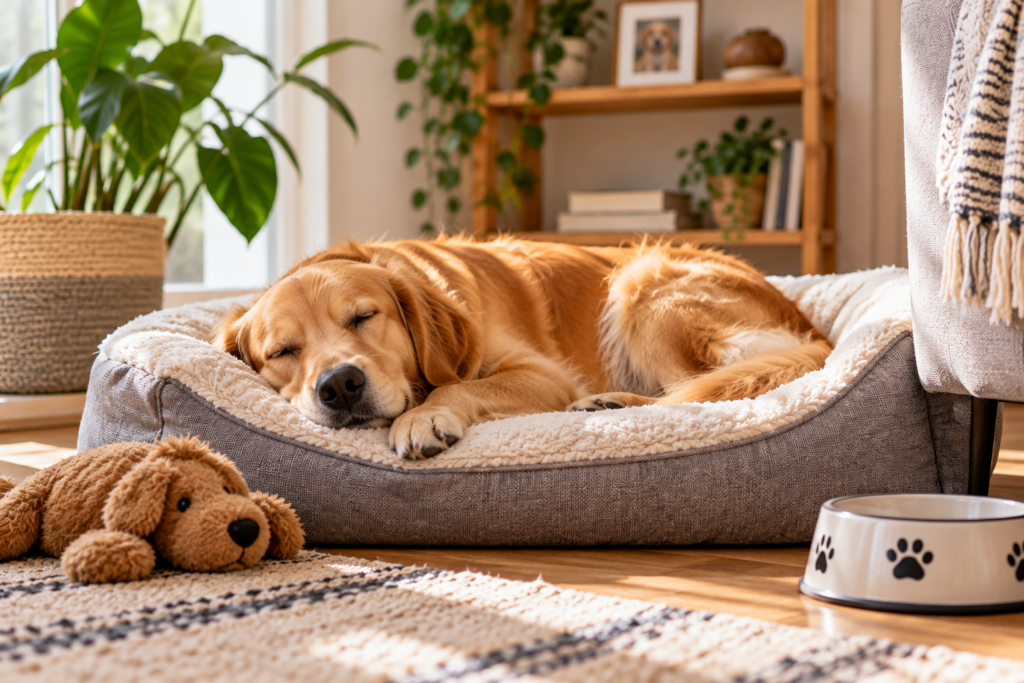
You don’t have to discourage affection to encourage confidence.
Start by giving your dog a comfortable resting spot where they can relax while you’re nearby.
Reward calm behavior when they choose to settle there. Offer suitable enrichment activities and let them enjoy quiet time without constant interaction.
For a dog who is already comfortable with brief separation, you can gradually practice stepping away and returning before they become upset.
Don’t force a frightened dog to endure longer separations. If your dog shows signs of panic, consult your veterinarian or a qualified behavior professional for an individualized plan.
And avoid punishing anxious behavior. Fear and distress aren’t acts of disobedience.
Frequently Asked Questions
Why does my dog follow me into the bathroom?
Your dog may be curious, enjoy your company, or have learned that following you is part of the daily routine. By itself, bathroom-following isn’t a sign that anything is wrong.
Why does my dog follow me and not other family members?
Dogs sometimes form especially strong routines with the person who feeds, walks, trains, or spends the most time with them. It doesn’t necessarily mean they dislike anyone else.
Should I stop my dog from following me everywhere?
Not if you’re both comfortable and your dog can cope when you’re apart. If the behavior creates safety problems or comes with distress, gentle training and professional guidance may help.
Final Thoughts
If your dog follows you from the kitchen to the couch and waits patiently outside the bathroom, there’s a good chance they simply enjoy being around you.
Affection, curiosity, routine, and learned rewards can all explain why your furry shadow never seems far away.
The important question isn’t how often your dog follows you. It’s whether they can also feel safe and relaxed when you’re not right beside them.
A healthy bond leaves room for both closeness and independence.
Sources and Further Reading
- American Kennel Club — Why Does My Dog Follow Me Everywhere?
- ASPCA — Separation Anxiety
- VCA Animal Hospitals — Separation Anxiety in Dogs
This article is for general educational purposes and does not replace veterinary advice.