

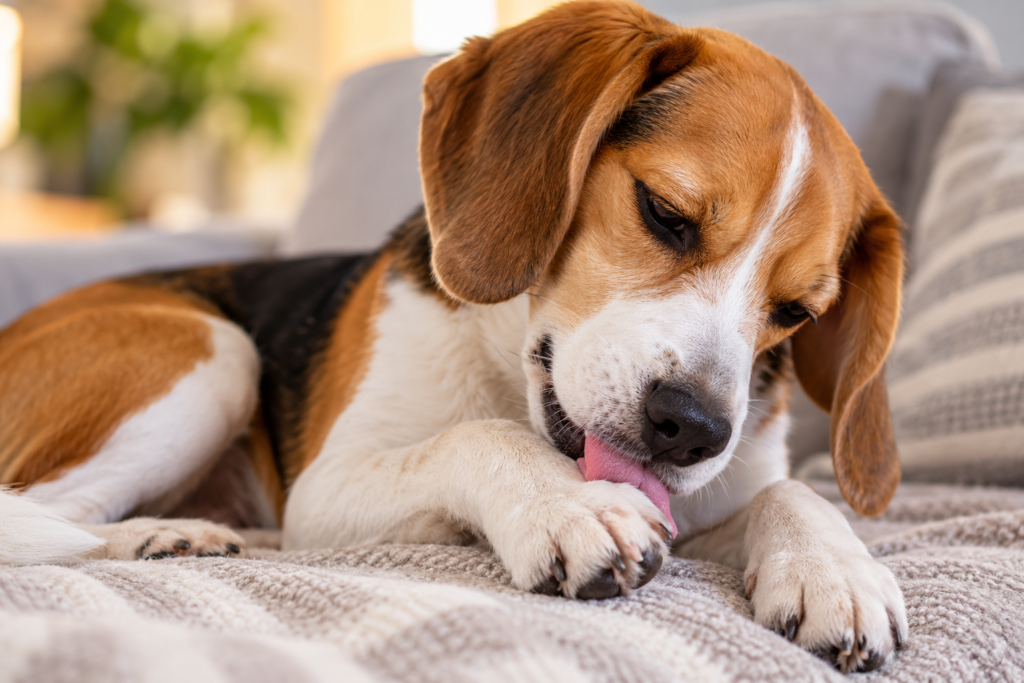
Why does my dog keep licking his paws? If you’ve been asking yourself this question, you’re not alone. Many dog owners notice their pets repeatedly licking their feet, especially when relaxing at home. Sometimes it’s normal grooming, but frequent licking can signal irritation, allergies, or discomfort.
You look over, and there he is, licking his paws. Again.
An occasional paw-cleaning session is normal. But when your dog keeps licking the same paw or spends several minutes chewing between his toes, it’s natural to wonder whether something is wrong.
Excessive paw licking can be a sign of allergies, skin irritation, injury, or discomfort. The key is noticing when it happens, which paws are involved, and whether anything else has changed.
When Is Paw Licking Normal?
Dogs naturally groom themselves. After a walk, your dog might lick dirt or grass off his paws before settling down for a nap.
That usually isn’t a concern.
What matters is a noticeable change in behavior.
If your dog suddenly starts licking more frequently, interrupts playtime to lick, or seems unable to leave his paws alone, something may be bothering him.
And one of the first things to notice is whether he’s licking one paw or several.
Why Is My Dog Licking Just One Paw?
When a dog repeatedly focuses on one paw, a local problem may be responsible.
Common possibilities include:
- A small cut or scrape
- A thorn or grass seed between the toes
- A cracked paw pad
- A broken or damaged nail
- An insect sting or localized irritation
Even a tiny object trapped between the toes can cause considerable discomfort.
Gently examine the paw if your dog allows it. Look between the toes, around the nails, and underneath the pads.
If you notice swelling, bleeding, limping, or significant pain, contact your veterinarian.
Why Does My Dog Keep Licking All Four Paws?
When several paws are involved, allergies or environmental irritation become possible explanations.
Some dogs develop itchy skin after exposure to pollen, grass, dust mites, or other environmental allergens.
Food allergies can also cause itching, although they are less common than many owners assume.
According to VCA Animal Hospitals, itchiness is a common reason dogs repeatedly lick their paws.
However, licking multiple paws doesn’t automatically mean your dog has allergies. Skin infections, contact irritation, and other conditions can produce similar symptoms.
Signs Your Dog’s Paws May Be Irritated
Sometimes the problem is easy to spot. Other times, irritation hides between the toes.
Pay attention to these warning signs:
- Red or swollen skin
- Unusual odor
- Moist or irritated areas between the toes
- Hair loss around the paws
- Reddish-brown saliva stains on light-colored fur
- Repeated chewing or licking
Bacterial and yeast infections can develop in irritated skin and make itching worse.
Repeated licking may also damage the skin’s protective barrier, creating a cycle of irritation and discomfort.
An unusual smell combined with redness or moisture deserves veterinary attention.
How to Check Your Dog’s Paws at Home
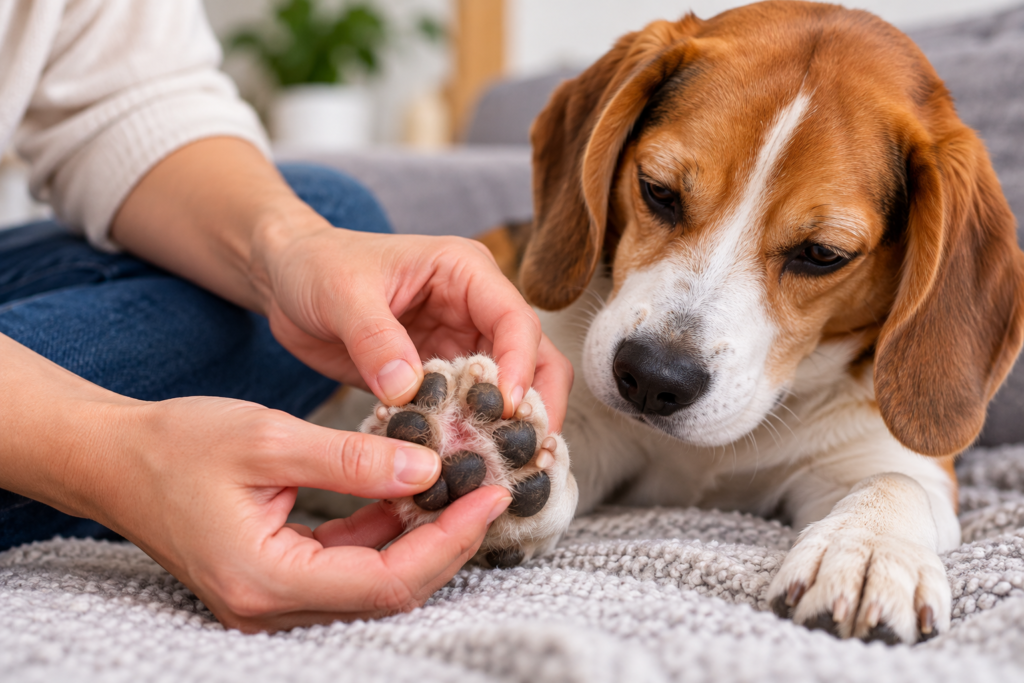
You don’t need special equipment to perform a basic visual check.
Choose a quiet moment when your dog is relaxed.
Gently lift each paw and examine the pads, nails, and spaces between the toes.
Look for cuts, swelling, trapped debris, or areas that appear unusually sensitive.
If your dog pulls away or shows signs of pain, stop rather than forcing the examination.
After walks, rinsing dirty paws with lukewarm water and drying them thoroughly may help remove surface irritants.
Avoid using human creams, essential oils, or medicated products without veterinary advice. Some ingredients can irritate the skin or be harmful if swallowed.
Never attempt to dig out a deeply embedded object yourself.
Could Boredom or Anxiety Cause Paw Licking?
Sometimes.
Dogs may develop repetitive licking behaviors associated with stress, frustration, or insufficient mental stimulation.
However, medical causes should be considered before assuming the behavior is psychological.
If your veterinarian rules out physical problems, activities such as sniffing games, puzzle feeders, appropriate exercise, and interactive play may help.
A predictable daily routine can also support your dog’s well-being.
The goal isn’t simply to distract your dog from licking. It’s to understand what’s driving the behavior.
Dogs can also show attachment-related behaviors in other ways. Learn more about why your dog follows you everywhere and what it may mean.
When Should You Take Your Dog to the Vet?
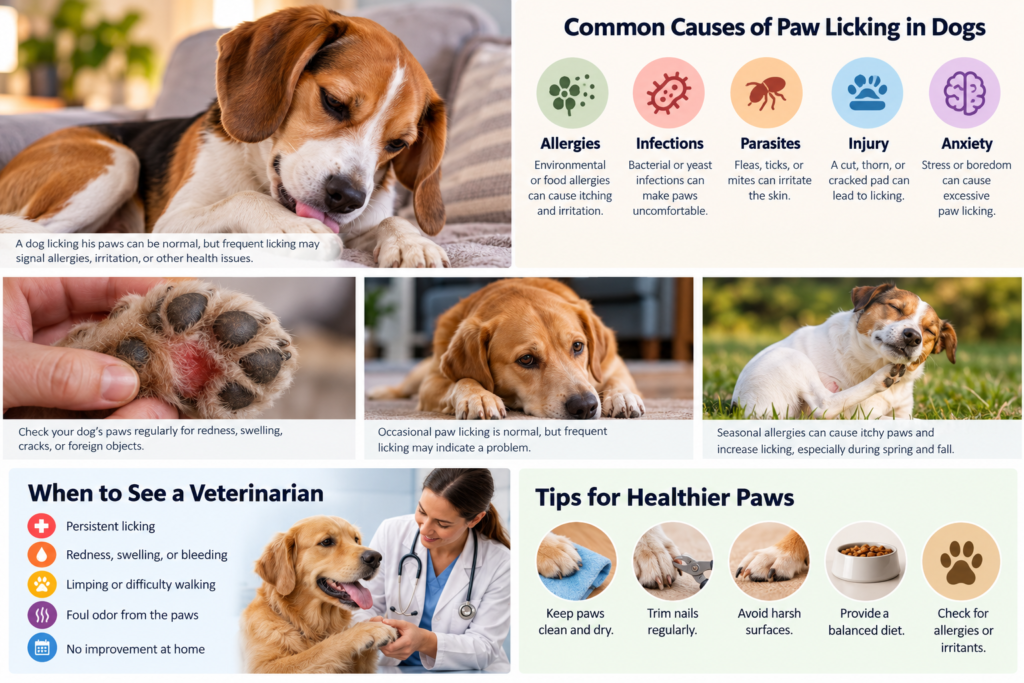
Occasional licking usually doesn’t require an appointment.
But if the behavior becomes persistent, keeps returning, or interferes with normal activities, schedule a veterinary examination.
Seek prompt care if your dog has:
- Limping or difficulty walking
- Bleeding or discharge
- Significant swelling or redness
- A deep wound or suspected burn
- A broken nail causing pain
- A deeply embedded foreign object
Your veterinarian may examine the skin, look for parasites or infections, and investigate possible allergies.
Avoid changing your dog’s diet simply because you suspect a food allergy. Diagnosing food allergies generally requires a veterinarian-supervised elimination diet.
Treatment depends on the underlying cause.
How to Help Your Dog Feel Better
It’s tempting to tell your dog to stop licking, especially when the repetitive sound becomes distracting.
But licking is often a response to discomfort.
Instead, pay attention to when the behavior happens, check for visible changes, and seek veterinary guidance if it continues.
Sometimes the cause is minor irritation after a walk. Other times, your dog may need treatment for an injury, infection, or skin condition.
The sooner you understand what’s bothering your dog, the sooner you can help him feel comfortable again.
Veterinary Sources and Further Reading
- American Kennel Club — Why Does My Dog Lick Their Paws?
- VCA Animal Hospitals — Paw Licking and Itchiness
- American Kennel Club — Pododermatitis in Dogs
This article is for educational purposes only and does not replace professional veterinary advice.