

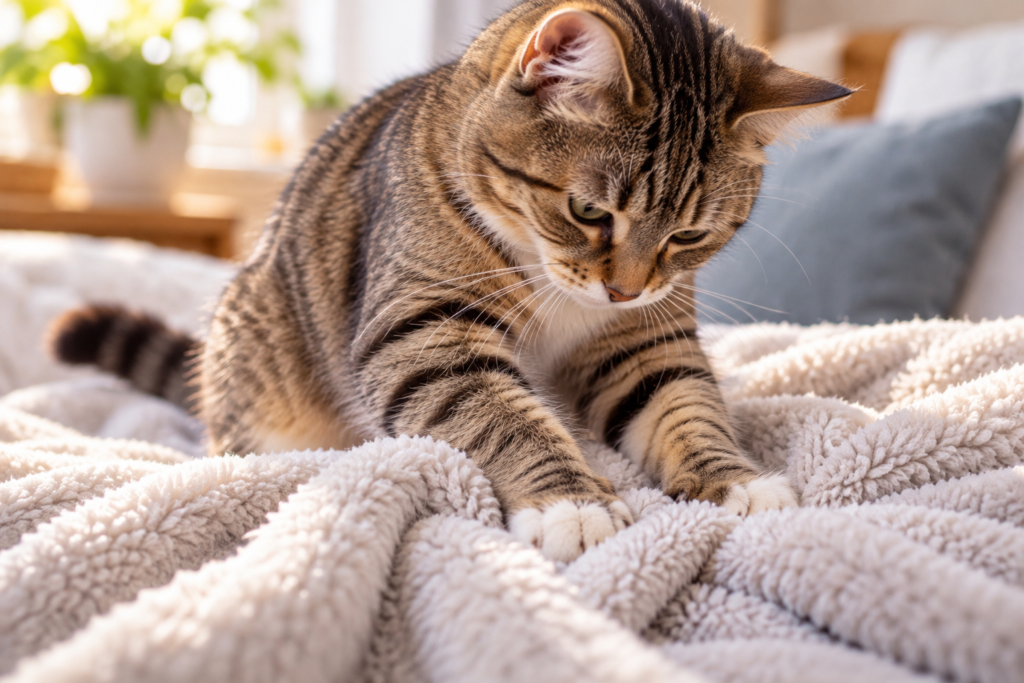
If you’ve ever had a cat curl up on your lap and start rhythmically pushing their paws into your blanket—or your stomach—you’ve probably wondered what they’re doing.
Cat owners often call this behavior “making biscuits,” and it’s easy to see why. Those alternating little paw movements look a lot like someone kneading bread dough.
But why do cats knead in the first place?
The answer goes beyond one simple explanation. Kneading is a natural feline behavior that can be connected to kittenhood, comfort, scent marking, and even getting ready for a nap.
Here are seven reasons your cat might be making biscuits.
1. Why Do Cats Knead? It Starts in Kittenhood
Kneading starts surprisingly early in a cat’s life.
Newborn kittens instinctively press their paws against their mother’s belly while nursing. This movement helps stimulate milk flow. According to veterinary experts, kneading is an instinctive behavior that begins during nursing and can continue into adulthood.
For many cats, the behavior continues long after they’re weaned.
Adult cats may knead soft blankets, pillows, beds, or their favorite humans. Although they’re no longer nursing, the familiar motion may still be associated with comfort and security.
So when your cat starts making biscuits on your lap, you might be witnessing a behavior that began during their earliest days.
2. Your Cat Feels Safe and Comfortable
Picture this: your cat jumps onto the couch, circles around, settles into a fluffy blanket, and starts kneading.
A few moments later, they’re purring with their eyes half-closed.
Sound familiar?
Kneading often happens when cats are relaxed and comfortable. It’s commonly seen before a nap or during quiet moments with someone they trust.
Of course, kneading alone doesn’t prove a cat is happy. Body language matters too.
A relaxed posture, soft eyes, and calm behavior are generally reassuring signs.
Cats feel more comfortable when they have a safe, familiar environment. If your cat gets nervous during trips, check out our guide on how to get your cat comfortable with a carrier for practical, stress-free training tips.
3. They’re Marking Their Favorite Spot
Cats communicate through scent in ways humans can’t easily detect.
They have scent glands in their paws, and kneading may help deposit their scent onto a surface.
That means your cat’s favorite blanket, bed, or even your lap could become part of their familiar, comforting environment.
This isn’t necessarily a territorial warning. Scent marking can simply be part of how cats make a space feel familiar.
If your cat repeatedly kneads the same cozy spot, scent may be one piece of the explanation.
4. They’re Getting Ready for a Nap
Have you noticed that some cats knead their bedding before lying down?
One possible explanation is that kneading is related to an instinctive nesting behavior.
Wild felines may press down vegetation to prepare a comfortable resting place. Domestic cats don’t need to flatten grass before sleeping, but similar movements may persist.
It’s a plausible explanation rather than a proven reason for every cat.
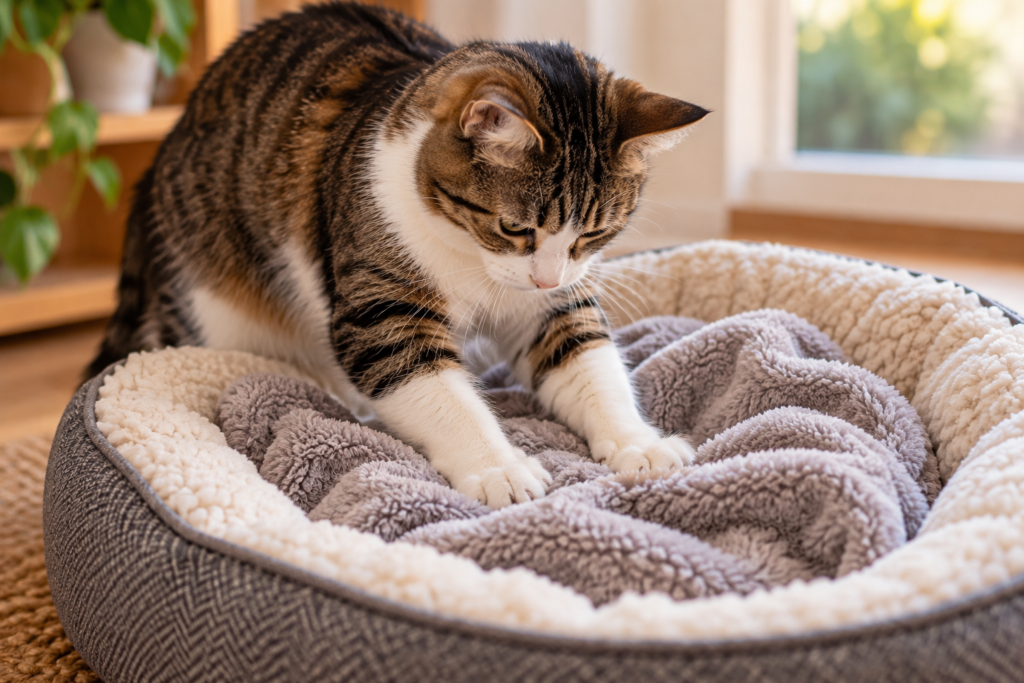
Still, it makes sense when you watch a cat carefully arrange a blanket before curling up for a long afternoon nap.
5. They May Be Showing Affection
When your cat kneads your lap while cuddling, it’s tempting to interpret those tiny paw movements as a sign of love.
And in many cases, that interpretation fits the situation.
Cats often knead people they feel comfortable resting against. Combined with relaxed body language, slow blinking, or gentle purring, the behavior can be part of an affectionate interaction.
But cats don’t all express attachment in the same way.
Some prefer sitting nearby, rubbing against your legs, or following you around the house.
A cat that never kneads you can still be deeply bonded with you.
6. Stretching Might Be Part of It
Kneading involves repeated movements of the paws, toes, and forelimbs.
Some experts suggest these motions may help cats stretch or flex their muscles, especially after resting.
Think about how cats often stretch their front legs when they wake up.
Kneading isn’t exactly the same movement, but it does involve extending and flexing the paws.
There isn’t strong evidence that stretching is the primary purpose of kneading, so it’s best considered a possible contributing factor rather than a definitive explanation.
7. Some Cats Knead When They’re Excited or Seeking Comfort
Kneading isn’t always limited to sleepy, peaceful moments.
Some cats knead when they’re anticipating attention or settling themselves in an exciting situation.
Others may use repetitive behaviors as a way to seek comfort.
The key is to look at the bigger picture.
Is your cat relaxed, purring, and settling down? Or are they showing signs of tension, such as flattened ears, a stiff posture, or attempts to hide?
Context helps you understand what the behavior might mean for your individual cat.
Why Does My Cat Knead Me With Their Claws Out?
Here’s the less adorable part of making biscuits: sometimes those tiny paws come with surprisingly sharp claws.
Cats may naturally extend their claws as they knead. They’re not necessarily trying to scratch you.
If kneading hurts, avoid yelling at your cat or punishing them.
Instead, try these simple solutions:
- Place a thick, soft blanket between your lap and your cat.
- Keep your cat’s nails appropriately trimmed.
- Gently encourage them to knead a nearby pillow or blanket.
- Reward calm behavior and let them choose where to settle.
Never declaw a cat just to prevent uncomfortable kneading. Declawing is a major surgical procedure that can cause lasting problems.
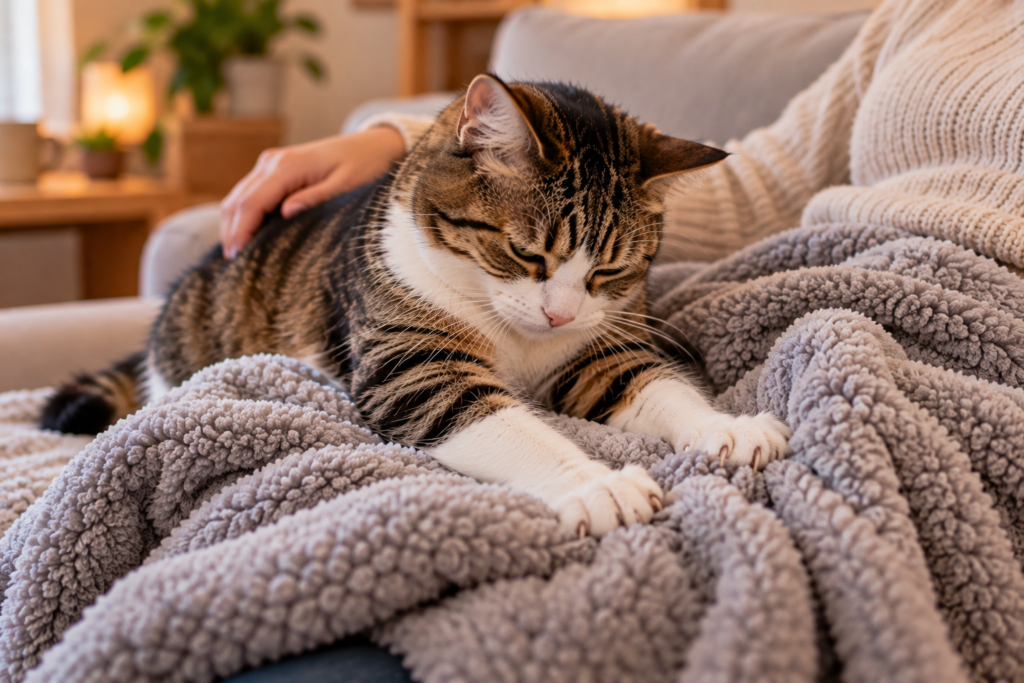
A cozy blanket is a much kinder solution.
Is It Normal if My Cat Doesn’t Knead?
Absolutely.
Some cats knead frequently. Others do it only occasionally, and some barely knead at all.
Personality, early experiences, and individual preferences can influence how often the behavior appears.
There’s no rule that says a happy, healthy cat must make biscuits.
If your cat enjoys relaxing near you but never kneads, there’s usually nothing to worry about.
When Should Kneading Be a Concern?
In most cases, kneading is harmless.
However, a sudden or dramatic change in behavior deserves attention, especially if it comes with other symptoms.
Contact your veterinarian if you notice:
- Kneading accompanied by signs of pain or distress.
- Sudden behavioral changes along with hiding, appetite loss, or unusual vocalization.
- Excessive licking or chewing that causes skin irritation.
- Repetitive behavior that seems difficult to interrupt and interferes with normal activities.
Kneading by itself usually isn’t a medical problem. It’s the surrounding changes that matter.
Final Thoughts: Those Little Biscuits Have a Story
Whether your cat kneads a blanket, their favorite bed, or your lap, those rhythmic paw movements are part of a fascinating natural behavior.
Kneading begins in kittenhood and may continue because it feels comforting, helps create a familiar resting place, or accompanies affectionate moments.
And while scientists haven’t established one universal explanation, that’s part of what makes cat behavior so interesting.
The next time your cat starts making biscuits, watch their body language, give them a comfortable place to settle, and enjoy the moment.
After all, there’s something special about being your cat’s favorite place to relax.