

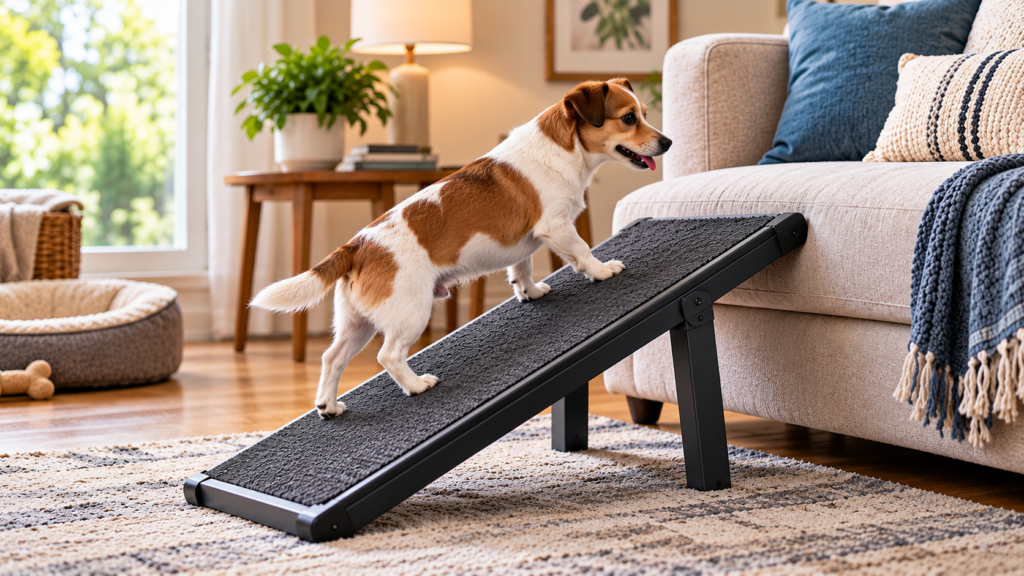
Choosing between dog stairs vs ramps can be surprisingly difficult, especially when your small or senior dog starts struggling to reach their favorite spots. Maybe your dog used to jump onto the couch without a second thought, but now hesitates, waits for you to pick them up, or decides it isn’t worth the effort anymore.
It’s a small change, but one that’s hard to ignore.
For small and senior dogs, getting onto beds, couches, and into cars can become increasingly difficult. Pet stairs and ramps offer a way to make everyday activities easier, but choosing between them isn’t always straightforward.
Joint problems can make these everyday movements uncomfortable. According to the American College of Veterinary Surgeons, dogs with osteoarthritis may experience stiffness, reduced activity, and difficulty jumping onto furniture or into cars. If your dog shows these signs, a veterinary evaluation can help identify the cause.
So, are dog stairs or ramps better? For dogs with joint discomfort or mobility problems, a gentle ramp is often the better option. However, stairs can work well for healthy small dogs that are comfortable climbing.
The right choice depends on your dog’s size, age, physical condition, and the space available in your home.
Dog Stairs vs. Ramps: What’s the Difference?
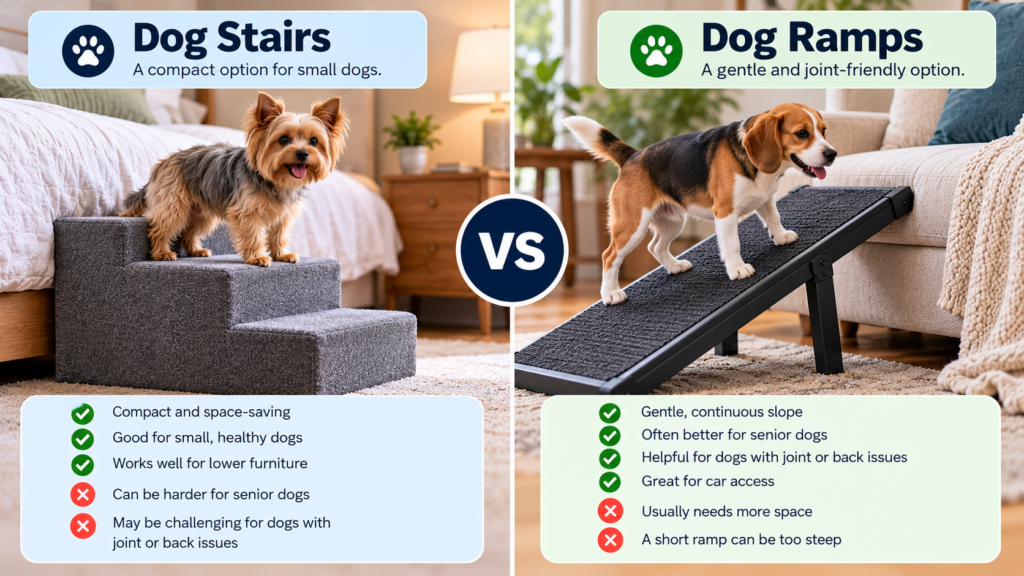
Dog stairs are miniature steps designed to help pets reach elevated surfaces. They’re usually compact, making them convenient for bedrooms and living rooms.
Dog ramps provide a continuous sloped surface that allows dogs to walk up or down without climbing individual steps.
Both options can reduce the need for jumping, but they require different movements.
With stairs, your dog must repeatedly lift their legs and shift their weight between steps. A ramp allows a more continuous walking motion, although a steep incline can still require considerable effort.
That difference becomes especially important for older dogs or those experiencing joint stiffness.
When Are Dog Stairs a Good Choice?
Pet stairs can be a practical solution for small, healthy dogs that simply need a little help reaching furniture.
For example, a young Yorkshire Terrier might have no trouble climbing three shallow steps to reach the couch but struggle to jump that same height.
Dog stairs may be a good fit when:
- Your dog is small but moves comfortably.
- They already use steps confidently.
- You have limited floor space.
- The couch or bed isn’t particularly high.
- The steps are wide, stable, and covered with a non-slip material.
However, not all pet stairs are equally comfortable.
Tall, narrow steps can be challenging for dogs with short legs. Soft foam stairs may also compress or shift under some dogs, making them feel unstable.
Watch how your dog moves in both directions. Climbing up comfortably doesn’t necessarily mean coming down is equally easy.
Why Ramps Are Often Better for Senior Dogs
As dogs get older, everyday movements can become more demanding.
Some develop arthritis, experience muscle weakness, or lose flexibility in their joints. Others become less confident about balancing on elevated surfaces.
A properly designed ramp can help by eliminating the repeated stepping motion required by stairs.
According to VCA Animal Hospitals, environmental modifications, including ramps and improved floor traction, can make daily activities easier for dogs with mobility limitations.
A ramp may be particularly helpful for dogs that:
- Have arthritis or painful joints.
- Struggle to lift their legs onto steps.
- Experience stiffness after resting.
- Have difficulty getting into vehicles.
- Need to avoid unnecessary jumping.
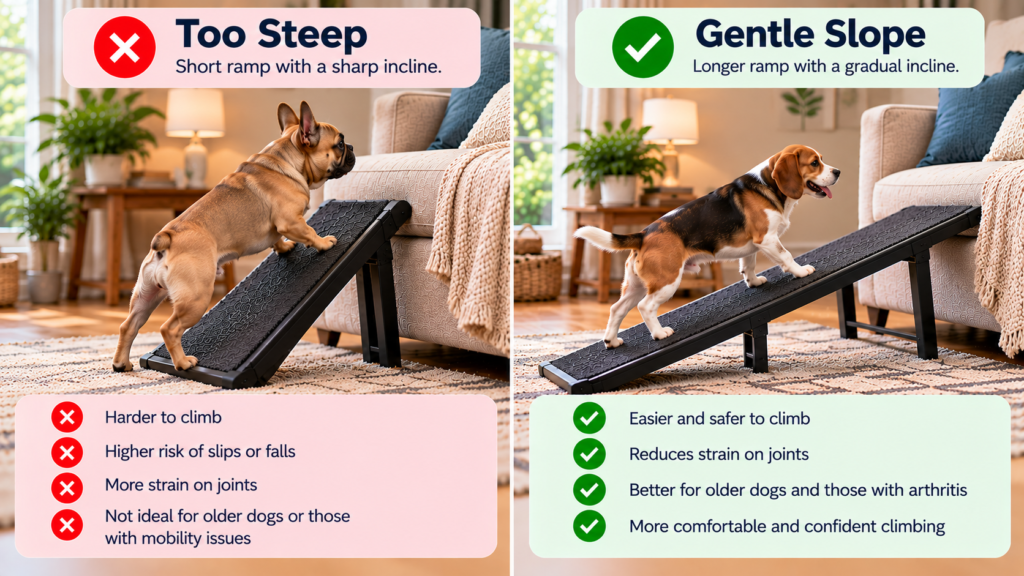
But there’s an important detail: a ramp is only helpful if your dog can use it safely.
A short ramp leading to a high bed may create an incline that’s too steep for an older dog. Slippery surfaces or unstable construction can make matters worse.
If your dog has significant mobility problems, a veterinarian can help determine whether a ramp, steps, assisted lifting, or avoiding the elevated surface altogether is safest.
What About Small Dogs Like Dachshunds and Chihuahuas?
Small dogs have their own challenges.
A Chihuahua may find a normal couch surprisingly high, while a Dachshund’s long back and short legs can make certain movements more concerning.
Dachshunds are particularly prone to intervertebral disc disease (IVDD), a condition affecting the discs between the vertebrae.
For dogs with back problems or an increased risk of spinal injury, it’s worth discussing furniture access with your veterinarian.
A gently sloped ramp may be preferable to repeated jumping or climbing, but no ramp can completely eliminate the risk of injury.
For healthy small dogs without mobility concerns, shallow pet stairs may still be a reasonable choice.
Rather than choosing based on breed alone, consider how comfortably your individual dog moves.
Dog Stairs vs. Ramps: Quick Comparison
| Feature | Dog Stairs | Dog Ramps |
|---|---|---|
| Floor space | Usually need less | Usually need more |
| Healthy small dogs | Often suitable | Also suitable |
| Senior dogs with stiff joints | May be difficult | Often preferable |
| Dogs with back problems | May require extra caution | May be preferable with veterinary guidance |
| Car access | Less practical for many vehicles | Often more convenient |
| Ease of use | Depends on step height | Depends on incline and traction |
Neither option is automatically safe simply because it’s marketed for pets. The design matters just as much as the type.
How to Choose the Right Stairs or Ramp
Before buying anything, take a few measurements and think about how your dog actually moves.
1. Measure the Height
Measure from the floor to the top of the couch, bed, or vehicle entrance.
For stairs, look for a step height your dog can manage without stretching or struggling.
For ramps, remember that reaching a higher surface comfortably usually requires a longer ramp.
2. Check the Surface
Smooth plastic or slippery fabric can make dogs nervous.
Choose a textured, non-slip surface that provides reliable traction, especially when your dog is coming down.
3. Look for Stability
The equipment shouldn’t wobble, slide, or shift when your dog steps onto it.
Check the manufacturer’s weight capacity, base construction, and attachment features.
Side rails or raised edges may provide additional protection on certain ramps.
4. Consider Your Dog’s Confidence
Some dogs are comfortable with stairs but hesitate when approaching a ramp.
Others dislike steps and prefer a continuous walking surface.
Their preferences matter, provided the equipment is appropriate for their physical condition.
How to Teach Your Dog to Use a Ramp or Stairs
Even the best equipment won’t help much if your dog refuses to use it.
Fortunately, patient training can make a big difference.
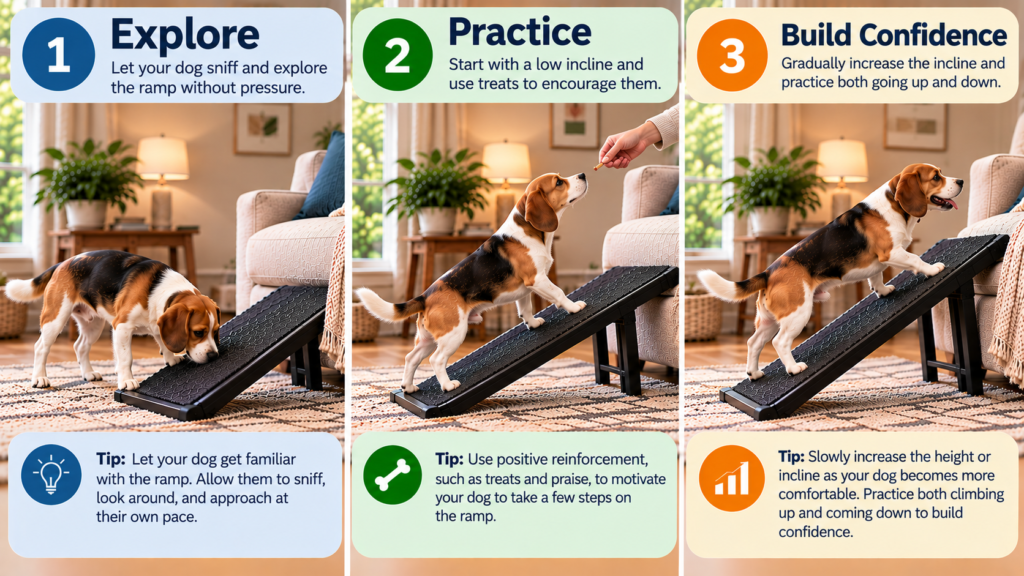
Keep training sessions short, positive, and comfortable for your dog. Never force them onto the ramp or stairs, and remember to practice going down as well as climbing up. If your dog shows signs of pain, fear, or difficulty balancing, stop and reassess before continuing.
Signs Your Dog May Need Extra Help
Sometimes the question isn’t whether to buy stairs or a ramp. It’s whether your dog is experiencing discomfort that needs attention.
Watch for changes such as:
- Hesitating before jumping onto furniture.
- Avoiding stairs they previously used.
- Moving more slowly after resting.
- Slipping or stumbling frequently.
- Showing reluctance to climb into the car.
- Whining or reacting when being lifted.
These behaviors can have several causes, including pain, weakness, or other health problems.
If your dog’s mobility changes suddenly, or they seem painful or unsteady, contact your veterinarian before attempting new exercises or equipment training.
Final Thoughts: Which One Should You Choose?
For a healthy small dog that comfortably climbs steps, pet stairs can be a convenient, space-saving solution.
For an older dog with stiff joints or limited mobility, a long, gently sloped ramp is often worth considering first.
But there’s no universal winner.
A stable set of shallow steps may work better than a dangerously steep ramp, and some dogs may need assistance rather than either option.
Ultimately, the goal isn’t simply helping your dog reach the couch.
It’s making the little moments of everyday life—climbing into a favorite sleeping spot, joining you on the sofa, or getting ready for a car ride—more comfortable and safer.
And sometimes, a small adjustment at home can make a meaningful difference in your dog’s day.
Keep Exploring Pawzunoria
Taking care of your dog goes beyond making everyday movements easier. Understanding their habits, behavior, and health can help you give them a happier, more comfortable life.
Looking for more helpful advice? Explore these Pawzunoria articles:
- Why Does My Dog Keep Licking His Paws? — Learn about common reasons behind excessive paw licking and when it may need attention.
- Why Does My Dog Follow Me Everywhere? 7 Reasons Explained — Discover what your dog’s constant companionship might mean.
- Do Dogs Dream? What Happens When Your Dog Sleeps — Explore what we know about dogs and their sleeping habits.